.avif)
A Queer View of Joy - David Hockney
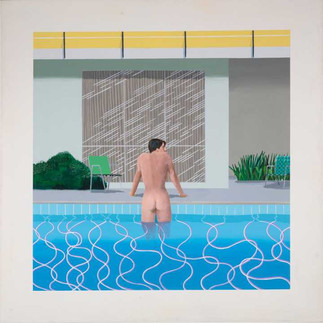
What made his queer art stand out was the depiction of domestic dullness. Although his form and colours were bold, the subject matter was often the normal; men swimming, taking showers, brushing teeth.
Sunday, 21 June 2026
Author: Joseph Hird
David Hockney (1937 - 2026) painted gay life brightly and without apology. He was an artist who showed the world the joy of homosexuality in a time when it was illegal in England, and helped to bring about change.
Born in Bradford in 1937, David Hockney came out 23 years later, 7 years before Britain decriminalised homosexual acts. He was always unashamed in his lifestyle, and found that the world he came from was too conservative. In his early work many of his paintings were coded with queer imagery clear to those in the know. From a modern perspective it is obvious that many of these paintings are queer coded, but back then, it maintained a level of innocence for the masses and allowed him to gain popularity in a time when it was unacceptable.




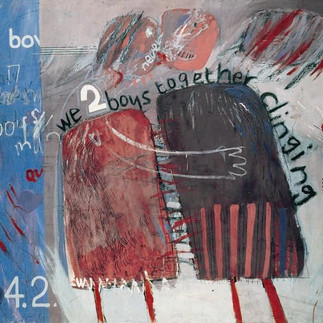
For Hockney art was about showing life as he saw it, and he saw it as bold, colourful, and full of queerness, so when he moved to Los Angeles in 1964, where gay life was flourishing, his paintings reflected that and he was able to be more open.
However, throughout his work what made his queer art stand out was the depiction of domestic dullness. Although his form and colours were bold, the subject matter was often the normal; men swimming, taking showers, brushing teeth etc. He showed the world what it could be like to be queer if it was normalised like heterosexual relationships, forming an identity outside of sexual acts. It was the beauty of queer life that has made his work so important and lasting.

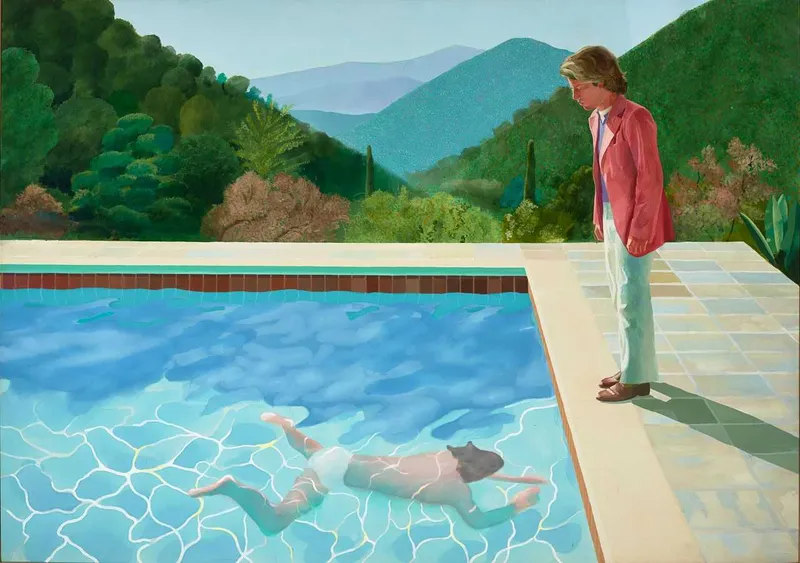


"There’s a moment when I said nature has an erection, when everything is stood up … it looks as though champagne has been poured over the bushes and it’s all foaming up and it looks marvellous."
Across his work Hockney has always experimented with form and technology, and in his later years he often used digital art as his medium. As he got older and his mother got ill, Hockney visited Yorkshire often, and in the 2000s he moved back permanently. Although his form and location changed, his subject matter always reflected his identity, and nature became his focus. His aesthetic were always joyful and full of life, his landscapes had a "gay sensibility," saturated colours, and large in size. They had a freedom that perhaps he felt more as he grew old. A world away from where he began, but close to home.

Gallery


