
Photocopy Art: Creating with New Technologies
In the 1960s many artists took to photocopiers to create some weird and wonderful images.
Wednesday, 22 April 2026
Author: Keighley Creative
Photocopy art started out as a way to collage ideas in a way which was fast, easy, and inexpensive, but as the technology advanced this quickly became a new medium to express artistic ideas; and so in the 1960s many artists took to photocopiers to create some weird and wonderful images.
In 1959 the Xerox 914 was introduced which started everything:
"The first successful plain-paper copier that automated image reproduction on ordinary paper, eliminating the need for darkrooms, specialized equipment, or chemical processing. This innovation democratized access to high-quality copying, allowing artists to experiment rapidly and affordably outside traditional printmaking infrastructures."
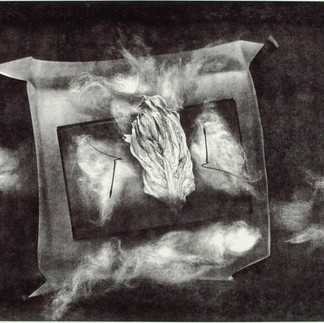
Two of the earliest artists to take to this medium were Wallace Berman (1926–1976) and Charles Arnold, Jr (1922-2011) both of which took the camera from the xerox printer to do copy overlay, layering images on top of each other, and overprinting which allowed inks to bleed as they built up, to create abstract collage. Much of their work was made from deliberate malfunction, paper jams, bleed, and expoure errors. These were created early in the 1960s when photocopiers were restricted to black and white:




However in the 1970s, colour printing was introduced, and two female artists pinoeered a multitude of new techniques, taking the art form in a new direction: Esta Nesbitt (1918-1975) and Sonia Landy Sheridan (1925-2021). Esta was a printmaker who invented xerographic drawing. This was made up of three key techniques: transcapsa, moving objects over the exposure window during printing, photo-transcapsa, doing the same but over existing photos, and chromacapsa, using color filters over collage.

Example of chromacapsa on collage, by Esta Nesbitt, overlaying writing and images.
"These methods allowed Nesbitt to produce dynamic abstracts and illustrative works, such as fashion designs for Harper's Bazaar, transforming the copier into a drawing instrument for both commercial and fine art applications."
During this period many women adopted Xerox art, one reason perhaps being the association with gendered roles in secretarial office spaces. They may have wanted to fight against stereotypes and patronising adverts of the time stating that "even women" can use these machines, by not only using them, but mastering, and then adapting them to their will.
One example of this was by Sonia Landy Sheridan who produced biomorphic images by adapting the photocopiers to her needs. She did this by playing with the printer settings and mixing organic matter into this digital art form. She often altered heat settings, used hair and leaves, and used the gels in the machines to generate fluid; creating some of her best known work, a series of flowers.


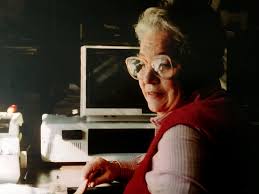


Her works, including the Thermal series, utilized 3M Thermo-Fax and early color copiers to create abstract, generative patterns that blurred the lines between human intent and technological output, influencing interdisciplinary art education."
Since the development of digital art and the redundency of copiers with advancements in computing 'copy art' has wained in popularity. It is still used as part of wider artistic practices, experimentation, layering and collage, but is rarely its own piece. However, with the rise of generative AI and the demand for tactile pieces which are imperfect by technological defects, perhaps there is a place in the future for art like this. Would you give it a go?
Gallery


